
Originally published at: Zohran Mamdani Is Brushing Off The Backlash Against His Public Grocery Stores - TPM – Talking Points Memo
New York City Mayor Zohran Mamdani knows what they’re saying about his grocery plan. Conservative media outlets and right-wing commentators have, for more than a year, been practically apoplectic about Mamdani’s push to open five municipal stores to sell discounted food. Local Republicans have responded to the initiative by comparing Mamdani to Fidel Castro and…
1 Like
Nothing for the people but WAR is FREE!!!
7 Likes
As noted LaGuardia, who was a model for many subsequent mayors created public markets, the most famous being La Marqueta in East Harlem and the Essex street market on the Lower East Side. My grandmother and great grandmother would shop at the Moore street market in Williamsburg. Bloomberg subsidized supermarkets in underserved areas via the market fresh program.
There is also the example of package stores which were created after prohibition ended. The states were allowed to regulate liquor sales. Some states chose the state owned package stores approach others opted for licensing private liquor stores.
13 Likes
This feels like a capital-I Important experiment. I hope it succeeds.
I haven’t studied the dismal science of economics deeply enough to judge the likelihood of its long-term success. In particular I can’t judge the likelihood of unintended consequences, e.g. people abusing the new stores. I’m not thinking of the welfare queen stereotypes, but rather of people who buy in bulk and sell on the grey market elsewhere at a higher price. Maybe there are steps in place to prevent that.
Or, perhaps a greater worry, capital will work hard to make it fail, in the courts or in lawmaking bodies at the city/state/federal level.
9 Likes
The real fear by the right is that everyone else will be forced to moderate their price increases. Food prices popped up because of supply shortages in the pandemic and then never came down, allowing a lot of profit taking. This is especially true of distributors, who get monopolistic pricing. When there are stores outside of their monopolies, their gravy train is over.
18 Likes
“Fox Business published a dramatic piece featuring interviews with “descendants of socialism” from Eastern Europe and Cuba“
Meanwhile, as a result of the 10% stake in private company Intel, using your tax dollars:
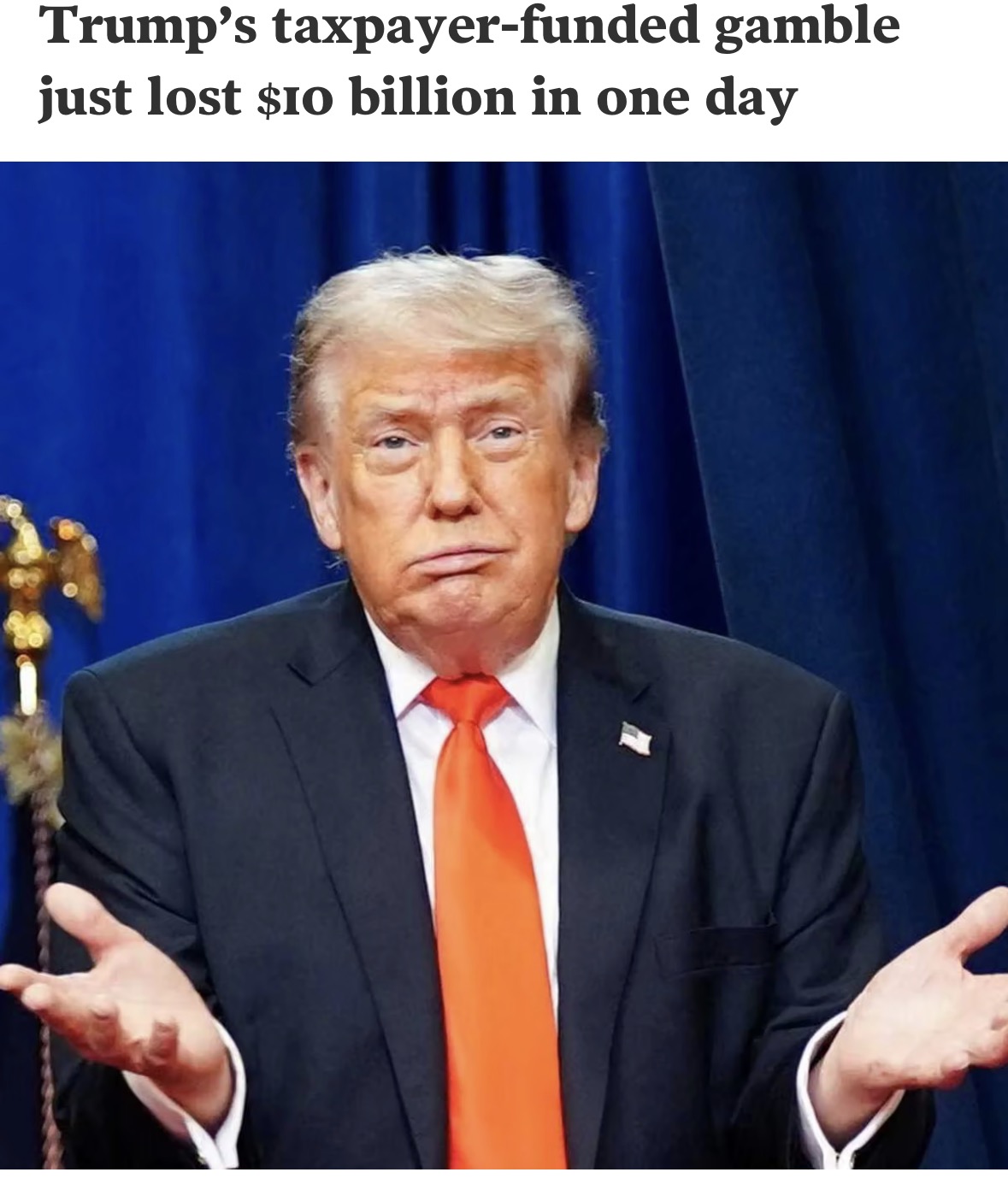
Cry me a river, Fox. You’re as stupid as they come.
11 Likes
Socialist communistical grocery stores? Great - how much is milk and a dozen eggs? Sign me up.
4 Likes
The GOP is scared shitless that this will be greeted by the people with cheers. I am sure the centMillionaires and up will be crying communism, because some how this will cut into their profits… but fuck em.
GO Zorhan
5 Likes
Nice article. It makes a lot of sense to use experienced outfits to run these, grocery margins are typically very low (1-2%) though inflation let them ramp this up closer to 3%, so they really know what they are doing. And the subsidy being on the rent rather than turnover (at least initially) gets the price down on the key items that way. Putting them in underserved areas also makes sense. So hopefully this succeeds and makes a difference for a relatively low investment.
We got a new Whole Foods in downtown San Diego, it’s really nice, though there are 4 security guards at all times, at least one with a firearm as well as a taser, to stop it devolving like the Ralphs and Albertsons have.
6 Likes
It is not apocalyptic, it is not Cuba or the Soviet Union. It is just stupid. It is empty and meaningless, expensive performative nonsense. It is one store, There are 23,000 food markets in the city. 99% of the people won’t even notice it exists.
2 Likes
“I think you simply have to prepare and expect for this kind of backlash. What it is, is a backlash to any kind of change. And if you want to avoid backlash, then all you will do is just steward the status quo. And that is exactly what has gotten us to this point,” he said. “It is critically important that we stop the act of constructing an ever-lowering ceiling on our ideas.”
well said.
3 Likes
is there any real qualitative difference between these stores and the state-owned rest stops along I-87 and I-90?
Maybe Kudlow, et al, should get out more and see what’s on offer in their precious rural areas of New York state.
6 Likes
When my children were living in NYC, my son in the Bronx for a year and in Manhattan for five years, and my daughter in Brooklyn for about 15 years, the paucity of grocery stores (and those were all small) or of bodegas that supplied some real food, amazed me, and they were living in pretty nice neighborhoods. Add to that the size of NYC kitchens, the lack of additional apartment space to store, say, a big package of toilet paper or a back-up package of flour, and the consequent need to shop frequently, usually by walking to and from the store. (If you have a car, you’re going to drive some place for groceries and spend an hour looking for a place to park your car? And then, schlepping those groceries home from your car, maybe parked a half mile from your apartment?)
Once my daughter and her husband started having children and their time for food shopping became even more scarce, freshdirect frequently came to the rescue. It’s a service that delivers groceries to your door, with many foods, esp. produce, much better than you’d find in her neighborhood’s grocery store and bodegas. (I have inherited many freshdirect bags – very handy!) But many, many New Yorkers cannot afford freshdirect or whatever other services like that there may be.
The problem is a big one in NYC. Mamdani’s city stores, if successful, will be only one prong in what will have to be a multi-pronged project. Grocery stores operate on very slim margins, so they can’t compete for space with many other retailers. Many of NYC’s lots have narrow frontage, not ideal for groceries. Any city planners here?
6 Likes
Here in western MA, on MS NOW I am bombarded with ads, new by the day, by Independent Nadia Milleron, Ralph Nader’s niece who is running against Richie Neal. She’s relentless. She never answers how she had supported Trump’s tariffs (claiming that they are not a tax we would all feel), or that her husband is working in the White House. Nor do those who write on her behalf in the Berkshire Eagle. (A lot of Hudson Valley granola whining about how war is bad.) Which paper she told she’d caucus with Repubs if they won the majority, with Dems if they did.
While the news is focused on the mid-terms, Putin is using it as cover to wreck Ukraine. He is using Melania’s truce in Oleshky to prepare for new attacks on Kherson. At the same time, Trump is blackmailing Ukraine to stop sending drones into Russia to attack infrastructure, particularly refineries, ostensibly to lower diesel prices in the US. It is truly sad to see a president behaving as a Russian asset without bipartisan outcry. No investigation into the latest restrictions on Starlink and Starshield. Musk in particular must feel untouchable and confident he controls the course of wars as he has 11,000 functional small satellites in orbit at the moment. The European response, just 400 satellites, would not be in orbit and operational until 2029. The Russian messaging is consistently maximalist, blaming Europe for Russia’s unilateral invasions and annexations.
Ukraine is ignoring US President Donald Trump’s repeated demands to halt strikes on Russian oil refineries, a Russian presidential aide said Friday.
“They have once again disobeyed him and are simply ignoring him, I would say. Trump has been persistent on this issue and continues to be so, but they are not listening,” Yury Ushakov told media outlet Vesti.
Ushakov also said Ukraine would unlikely have carried out strikes on Russian oil refineries without European support.
“They are probably ‘brave’ because Europe continues to support them. On their own, they would hardly have dared to do this,” he said.
2 Likes
What shines out for me from Hunter’s insightful reporting and interview is the wholeness of Mamdani’s vision, his warmth, and his enthusiasm for creative and effective governance on the street level, where most of us engage. Note the very big difference between Zohran and his predecessor, Eric Adams.
9 Likes
Shanghai, a huge city within the larger Yangtse River Delta, faces the same limits to growth as New York. One policy goal is the “15-Minute Community Life Circle”, aiming for 99% accessibility to basic neighborhood services within a 15-minute walking distance, and 85% of traffic by foot, bicycle or public transport. Imagine cable cars across the Hudson in the city that invented the aerial tramway.
The Chinese are also taken with Barcelona’s 39 municipal food markets with sit-down counter bars, classic tapas stalls, and modern chef-driven concepts where you can eat fresh food prepared right in front of you. Of course you find such concepts in the US, but, say, the traditional farmer/fisher-owned Pike’s Place Market in Seattle is not super-convenient yet as Seattle tries to upgrade its public transit (which we love) to get a level that gets people out of their cars. Jimi Hendrix even wrote a song about the challenges of driving in Seattle.

2 Likes
Stupids leading the stupids. Take away their broadcast licenses.
If buying in bulk and reselling becomes a problem, it is pretty easy to solve. Just set limits on the amount of items that can be purchased at one time. Stores already do that for things that are on sale.
OTOH, Big Capital and their paid for politicians could torpedo this thing.
3 Likes
What I am hoping for is not only that Mamdani’s effort succeed, but other states and cities take on the idea and implement it too. Think of all of the food deserts throughout the United States. Drop a city owned store in one of those and make a lot of people’s lives better.
4 Likes