
Originally published at: Hegseth Sidesteps Murkowski Question About Backdoor War Authorization
Almost five months into President Donald Trump’s war on Iran, the Trump administration still has not asked for authorization from Congress to continue hostilities. They, however, did present Congress with a supplemental request — which includes, among other things, an ask for $67.1 billion for the Department of Defense to fund Trump’s war. Defense Secretary…
1 Like
I remember Clinton claiming the supplemental was an authorizaton. Republicans were screaming at the time. The nonsense about Article II powers is just that nonsense. This war isn’t one of self-defense. It is a war of choice.
10 Likes
standalone Article Two authorities exist for us to conduct this operation on behalf of the defense of the American people
and the reason I was not speeding is that my car has an eight cylinder engine, so I am still only going fifteen miles an hour per cylinder, because in my home country, which I cannot reveal the name of, all speed limits signs are posted on a per cylinder basis
8 Likes
In 1999 Clinton was looking for support for the effort to end the war in Kosavo by sending troops to occupy the place.
At the time the the General Counsel of the of the ACLU (how quaint) argued “Launching a sustained military action is a decision that no one person in our democracy – including the President – can authorize,” adding that the ACLU takes no position on the merits of the use of force in Kosovo.
4 Likes
Tell Trump to sell his Qatari jet to pay for his war. Remember the r/w GOP loved Palin for sellng the state of Alaska’s jet on eBay.
7 Likes
Hegseth is an alcoholic. It defines everything about him.
7 Likes
The blingy qatari jet had been for sale for about five years before it was given to Trump. In fact it was probably given to Trump because they couldn’t find a buyer. Ugly secret about 747s is both Airbus and Boeing sell more modern jets that have made 747s obsolete. .
4 Likes
To be fair, he’s also as asshole, a bigot, and a horrible human being.
15 Likes
Not too mention an axe-tossing terrorist, according to some Revolutionary War reenactors.
7 Likes
And rapist.
7 Likes
Just a reminder …
“Americans are a peace-loving people.”
— George W. “Shrubya” Bush, formerly dumbest US President
Fun Fact: In its 250 year history the United States has NOT been engaged in a war or military conflict/action for ~15 years.
5 Likes
All this yapping about manliness and testosterone and sure enough, every time they have to go to Congress it’s a temper tantrum punctuated with inability to answer the most basic questions.
And don’t forget hiding behind the corpses of the teenagers(!) who died in this illegal war of choice when you call them out on any of it.
5 Likes
He is also a Fox News host, but I repeat myself.
9 Likes
A word about the reenactor Kegsbreath hit with an axe.
Drummers were used in the Revolutionary War as a communications tool. Usually a pubescent boy working alongside the commander, the field drummer relayed signals for troop movement (advance/retreat) based on the cadence he played. The drum was utilized because it could be heard over long distances amid the cacophonous mayhem of battle. Fife players need not apply.
Later, when troops became mounted on horseback, a drummer became impractical and was replaced with a bugler, I presume much to fife players’ chagrin.
Following the disuse (and eventual extinction) of carrier pigeons in favor of “modern” communications (radio, etc.), the “band” (drum, bugle) became obsolete in war, except for entertainment purposes (Special Services).
There were many famous people who served in Special Services. One of the lesser known was my friend Ed Wyrick. Forty years my senior, he was an old school jazz piano player who, asked if he knew some song or another, would reply: “Know it? Hell, I wrote it!”
While stationed in Europe during the so-called War To End All Wars Ed’s roommate was another piano player named Hank. He said they got along well enough. Ed did his thing; Hank did his. They weren’t buddy-buddy. No promises to “keep in touch” were made when they were reassigned; no letters were exchanged after the war.
Time passed and Ed hadn’t given much thought to Hank, until he heard the “Peter Gunn Theme” and learned that Henry Mancini wrote and arranged it. Hank had become a huge success!
“If I’d have known,” Ed told me years later, “I would’ve been nicer to him.”
-30- ## -30- ## -30- ## -30-## -30- ## -30-## -30- ## -30- ## -30- ## -30- ## -30- ## -30-
Thank you for coming to TioTalk Tuesday.™
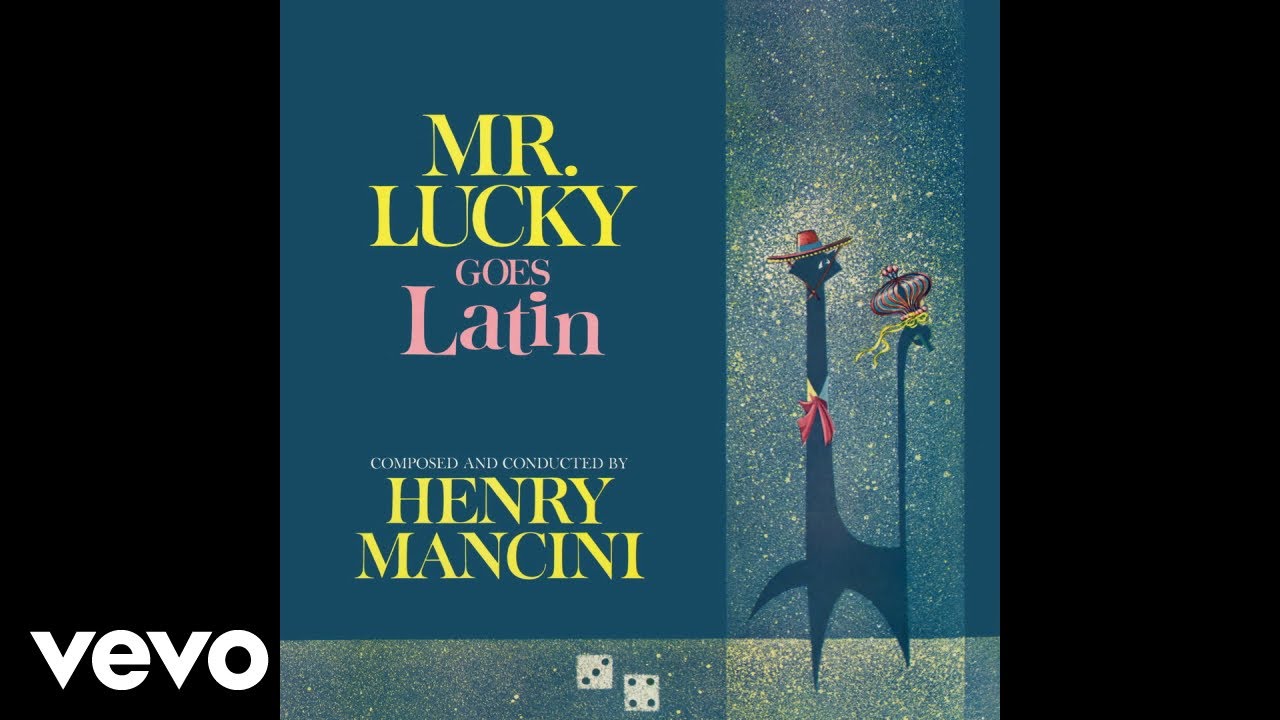
9 Likes
And a serial violater of 18 U.S. Code § 798 - Disclosure of classified information
If he was still in the National Guard Whiskey Pete would have been court martialed.
5 Likes
Love the Latin intro on Lujon, less so the string parts.
But man, Peter Gunn is great for dancing the West Coast Swing!
2 Likes
And that’s not because he’s an alcoholic, he was born into it!
1 Like