

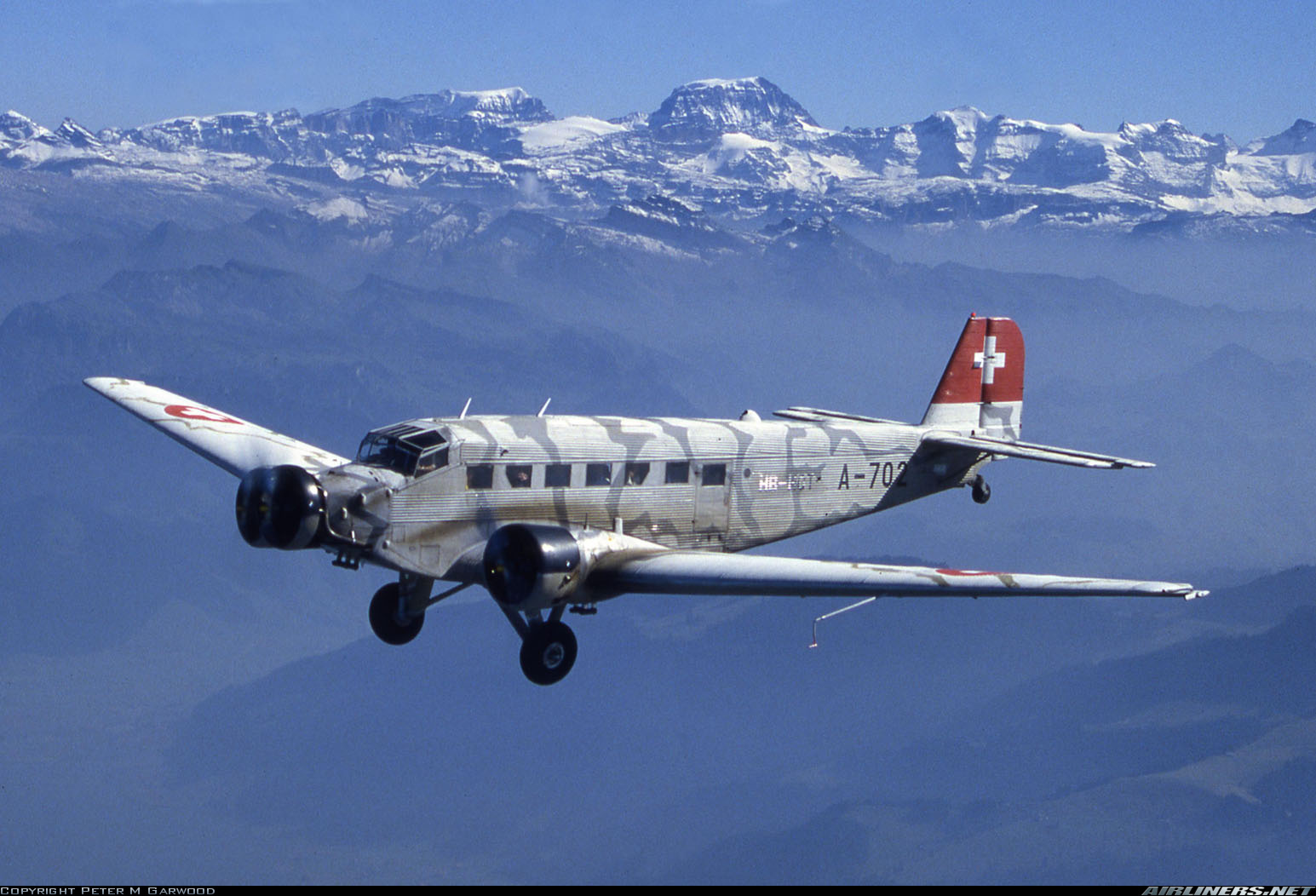
There aren’t a lot of things that make an aircraft that size fall nose-first out of the sky. First question is how fast it was going, because 100 mph is typical of normal flight.
plunged near-vertically
Doubt it. Looks like it at least tried to land. Way too much of it left for a nose-in.
We’ll find out in some months if there’s a report issued. Can’t have been that much forward speed either or the wreckage would be more scattered.
Sad and odd.
Looks like the plane in “Where Eagles Dare.” They were the German equivalent of the Douglas C-47. Old airframe. Wouldn’t be surprised if a control rusted out. The pilots were trying to fly the plane all the way to the ground. I have to agree that aircraft came in pretty shallow or it would have been in a lot more pieces.
That’s the type but it looked more like this. It’s a contemporary of the DC-3, which is still in the air in a lot of places. It was nicknamed Iron Annie for its strength.
No fire, eh? Fuel starvation?
Pilot killed everything likely.
I am thinking he had a gross failure of the vertical flight controls. Horizontal, wouldn’t it likely be spread out a lot more? If he had stalled, he could also have had that sort of nose in depending on altitude.
Don’t know, it looks like a lot of it from the rear entry doors forward is not there anymore.
It’s easy to be wrong looking at a picture so I’m certainly guessing. I see two wings, the whole fuselage and the tail. It’s crushed of course but seems there. The wing engines would typically be thrown clear because of their weight. The area seems to be pretty flat. My guess is an attempted landing, dropped a wing, striking the ground and then ground looped the plane with the nosing in right at the end.
They claim the aircraft did fine on its most recent inspections both shallow and deep. If that’s true and the inspections were done right, then there’s some form of trouble that isn’t being caught, which would be useful knowledge in general.
Other obvious question: were they where they were supposed to be? because if not they might well not have had the instruments to warn them about it.
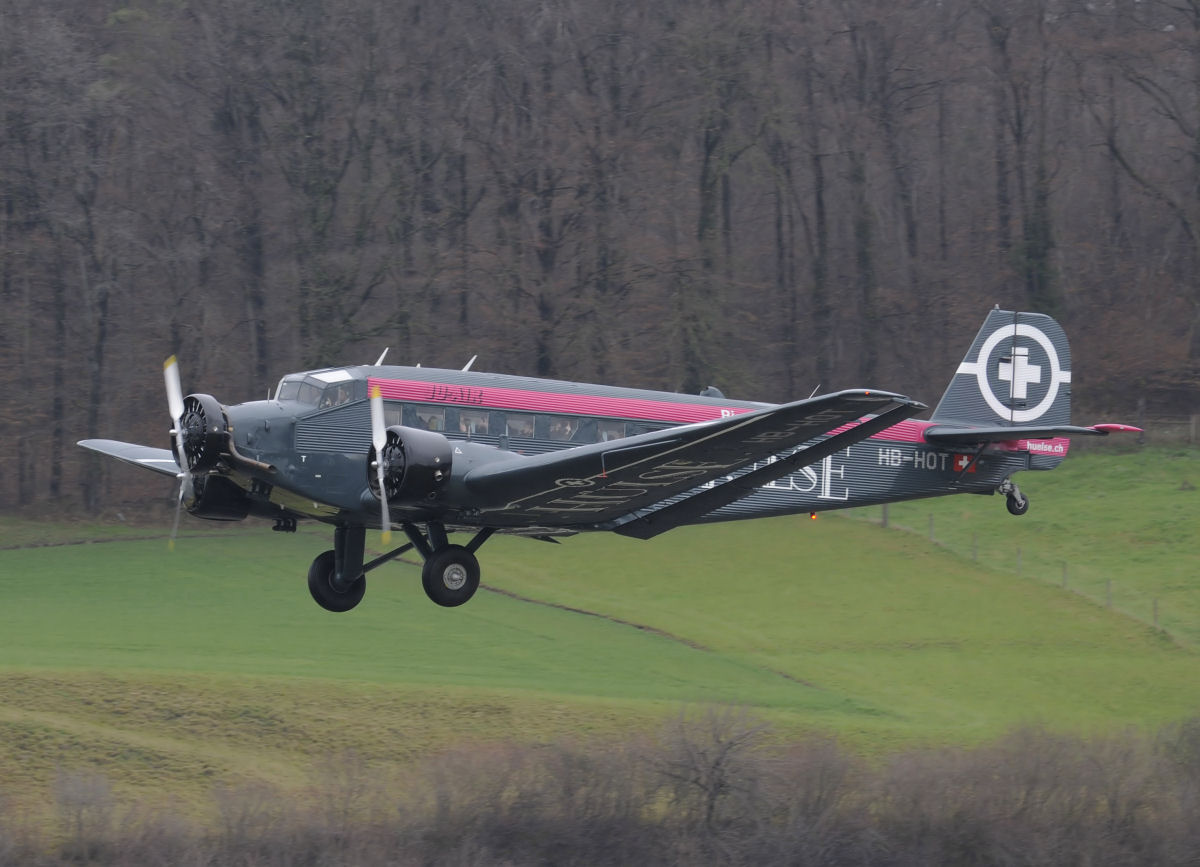
This appears to be the very plane that crashed. “HB-HOT” is what the article says was the registration of the plane.
According to the wiki on the aircraft, it was active in 1939 and at the time of the crash 79 years old. A lot of things can go wrong including metal fatigue. Just food for thought.
Except that it received regular service and had flown only 5 hours since its last service call.
As for ‘did it actually go in nose first?’… yeah. It looks like it did. If that was an attempted landing, then it would’ve had a lot more lateral movement. Notice how the fuselage is crumpled and bent? It doesn’t get that way pitching over on its nose. To bend like that, it would’ve either had to have impacted moving straight down (and had the frame bend as the front part stopped and the tail tried not to) or hitting the ground tail-first in an attempted landing, and having the frame bent that way.
The only problem with that scenario is that it doesn’t allow for the plane to end up upside down. Once the frame’s bent like that, the tail gear is higher than the bed. The plane’s center of mass is behind the wings, and it’s already trying to go down hard enough that it’s pitching back. If it’s bending hard enough, fast enough, to bounce up again and flip over backwards, the tail breaks off. The only way it gets upside down while moving forward is pitching forward (nose down, engine into the ground)… but again: center mass is behind the wings. So to pitch forward and flip over that way, it’s got to be moving damned fast… and if that’s the case, the wings (with the large mass of the engines) don’t stay right next to the fuselage when they detach the way they clearly are here.
So, yeah. This is nose-down, straight into the ground. On an airframe known to land safely with only one of its three engines still running. Something happened, whether mechanical or criminal, on that aircraft.
While I hate to admit being familure, the condition, angle, and damage is consistent with the stall spin event.
The comment about the plane hitting nose down is most likely from the uninitiated.
Hard to do any more then speculate as to the cause and say I kind word for the deceased and their loved ones.
Also with a landing there is usuly enough horizontal volicity to flip the aircraft over. During the spin the aircraft just makes a deadly hole.
M. Paul
Edit for clarity
High altitude… High temperature( low air density) Low ground altitude (sight seeing)… My first guess is low speed stall, no time to recover.
No fire? No fuel… Also causing stall?