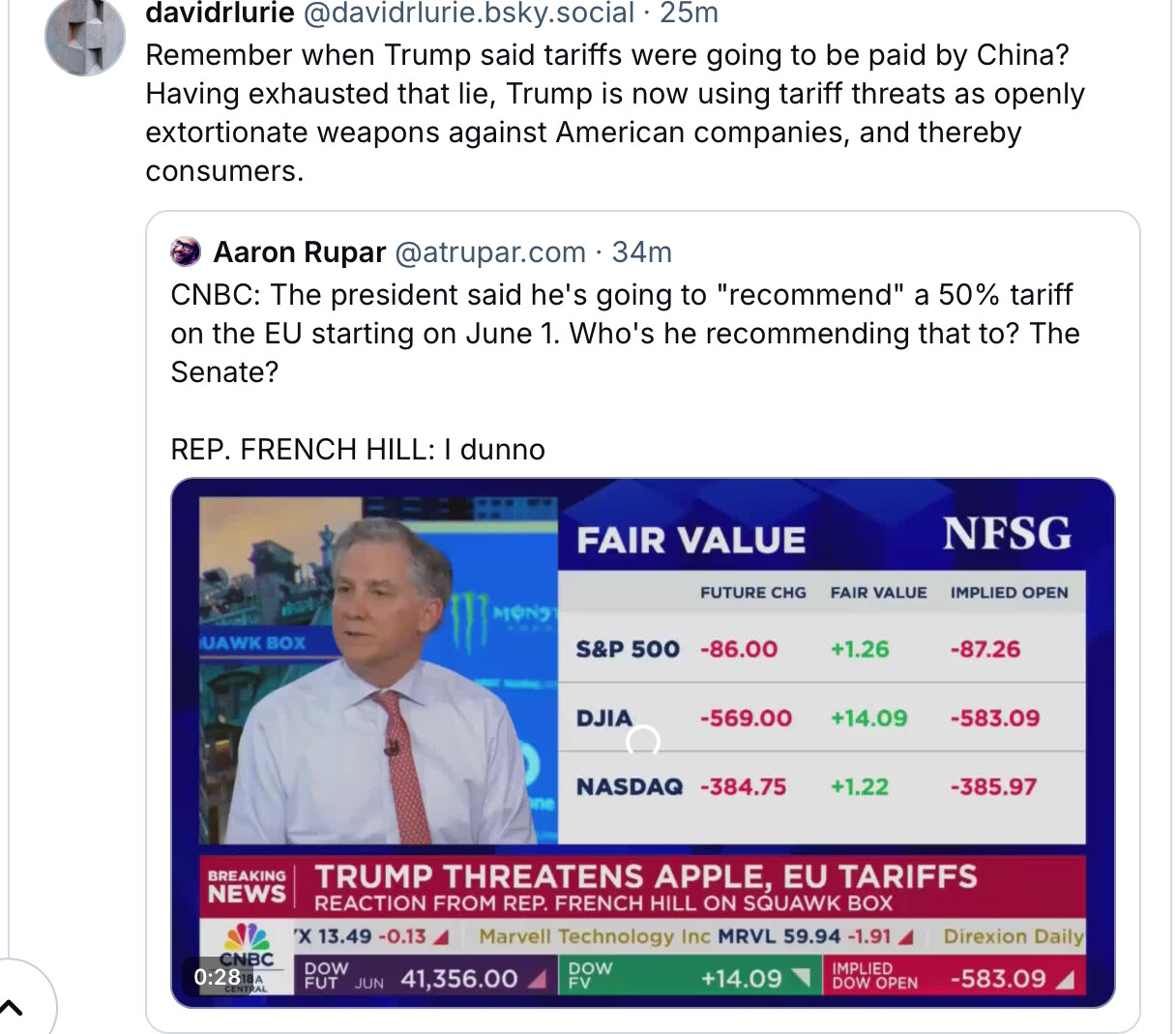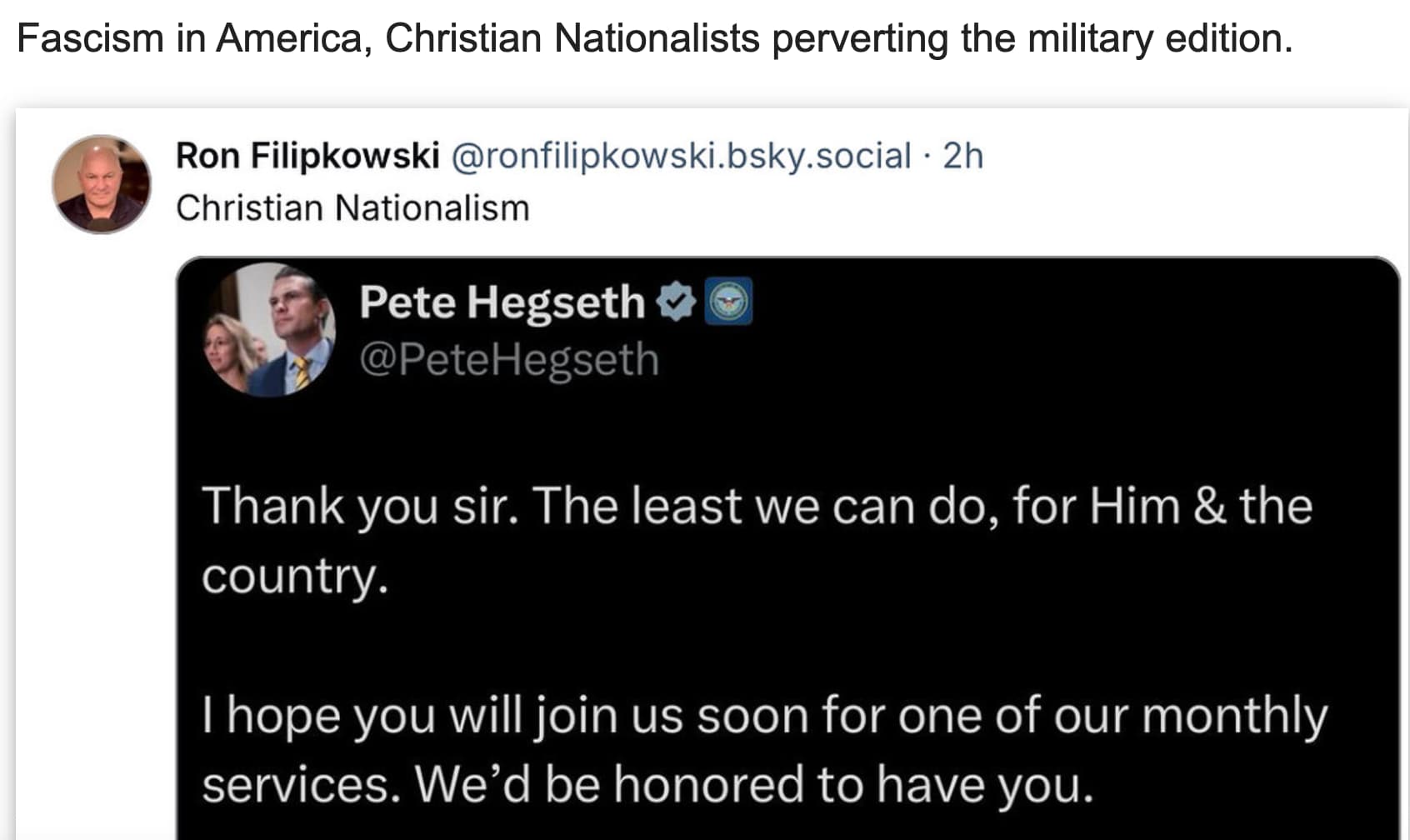
It seems reasonable to me that if the Bible-ists want to play politics, they are also open to all of the consequences of that move, starting with taxation and moving on from there to the maximum

15 Likes
Yes, he can. And, yes, he is.
30 Likes
I got nuthin.
12 Likes
Along with 70 million + Americans who voted for Trump a second time.
23 Likes
Yup
Could be?
49 Likes
Just thinking out loud here.
If there is no use for federal administrative agencies because of the move away from expertise and towards politicization, I would think there would be for states.
If states beefed up their administrative agencies, then policy/regulation based on expertise could continue… BUT, how does this hold up/make sense in a nationalized economy, much less in a global economy?
This seems to me to be adding to national disunity, as states see “their” interest moving away from the federal government…And if course, there was the Senate’s move to block California’s carve out, which had allowed them to have their EV mandate…Ugh!
27 Likes
It’s all over for American democracy.I no longer care if I get hit with being called defeatist or being a loser, the results are in. Does anybody really think rallies at State capitols are going to change anything at all ?Trump has managed to burn it all down in in about 5 months time,there are no guardrails left to contain his insanity. And the culprits are the GOP politicians who put party over country so that they wouldn’t get primaried. Such a system doesn’t deserve to survive.
Kombo Kat and Valentine are happy being a thousand miles away from it all

19 Likes
Yes, he can. As far as the iPhone industry, saying they couldn’t be manufactured in the US goes back to Steve Jobs in 2010, and reiterated every couple of years since then.
The notion Apple can reshore iPhone production is a “fictional tale,” Dan Ives, global head of technology research at financial services firm Wedbush Securities, told CNN’s Erin Burnett last month.
US-made iPhones could cost more than three times their current price of around $1,000, he said, because it would be necessary to replicate the highly complex production ecosystem that currently exists in Asia.
“You build that (supply chain) in the US with a fab in West Virginia and New Jersey, they’ll be $3,500 iPhones,” he said, referring to fabrication plants, or high-tech manufacturing facilities where computer chips that power electronic devices are normally made.
And even then, it would cost Apple about $30 billion and three years to move just 10% of its supply chain to the US to begin with, Ives told Burnett.
32 Likes

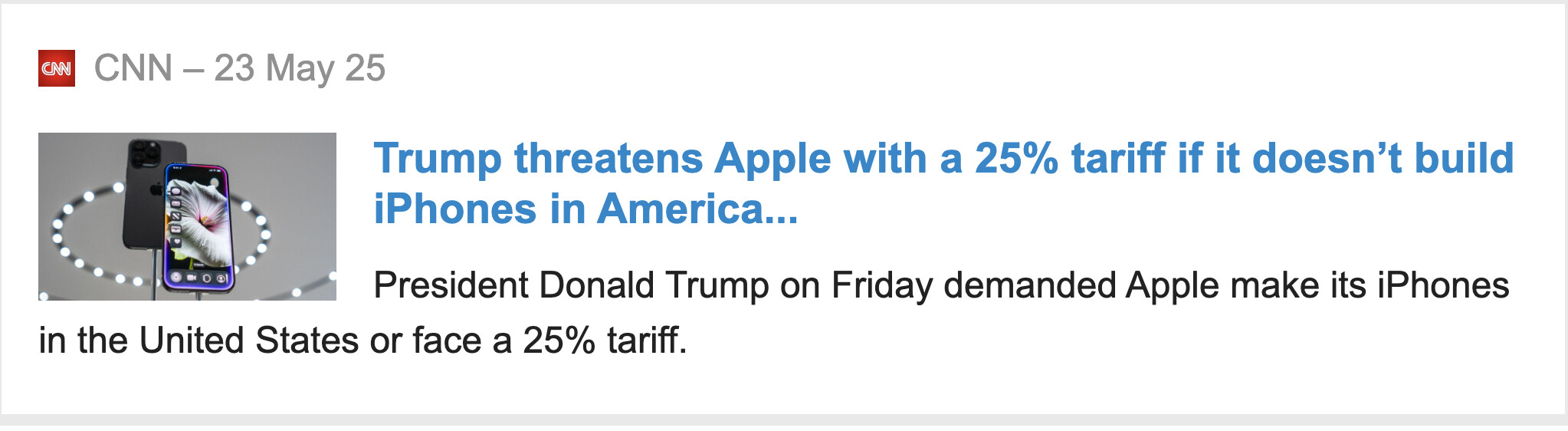
He isn’t. He knows the problem with Apple moving iPhone production to the U.S. isn’t the time it would take to move the factories here, it’s the lack of skilled labor. As Tim Cook, Apple CEO put it:
“In the U.S., you could have a meeting of tooling engineers and I’m not sure we could fill the room,” Mr. Cook said in 2017. “In China, you could fill multiple football fields. It’s that vocational expertise that is very deep.”
Bessent knows this, but he’s a committed Trump toady and will weasel his way around speaking the truth in these TV interviews.
24 Likes
Bessent is stupiding along to get along. I don’t question his intelligence, but rather his ethics and morality for accepting a role in the Trump regime to begin with. Is he inside trading? Follow the money.
36 Likes
“The most capable potential employees decide its not worth the bother, and the workforce becomes a mix of people who cannot get a job elsewhere, and short term political appointees.”
I hate to break it to you, but the folks who go to work for the government, at least in the scientific fields, have always been considered those who “cannot get a job elsewhere” or are at least not that good.
The money differential has always been there for scientific and engineering types. I can’t speak to administrators and clerical staff.
3 Likes
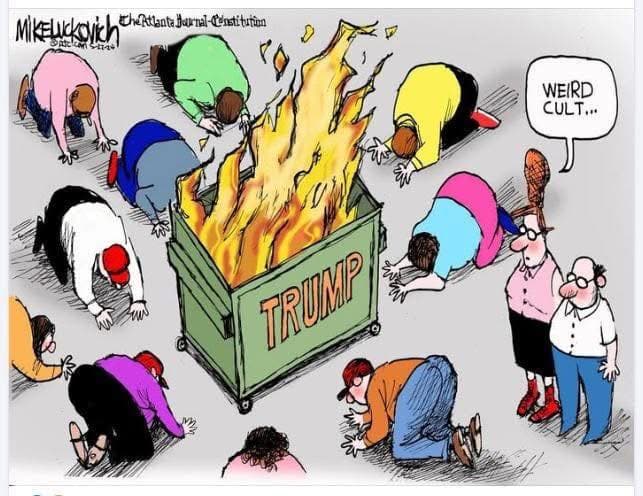
All of that would have been bad enough at any other time, but the Roberts Court just handed a match to a confirmed arsonist in Donald Trump.
C’mon, now. Let’s be fair. They also handed him gasoline and said, “Sure, you can close all the fire stations.”
27 Likes
“… it was not enough to dislodge the conservative justices from their ideological attachment to the radical theory of a unitary executive.”
Don’t these justices realize they are shooting themselves and all judges in the foot with the concept of unitary executive?
9 Likes
I love Kevin Kruse so much.
5 Likes
Only the best.
Apple is not a merchant semiconductor vendor, and they don’t have a foundry. They can’t do diddly-squat to make the semiconductor supply chain more secure.
But that sleepy old guy did do something.
17 Likes