
Thanks! Any charge for that?

7 Likes
At om, it’s all one. There are pluses and minuses, you have to keep your eye on the little things.
2 Likes
What are these White folks afraid of? Well, I think the unrest and protests around George Floyd’s murder AND the protests to remove Confederate statues really freaked people the fuck out. They didn’t see these statues and monuments they way Black people see them. They didn’t (and still don’t) understand the history of them, and intent for placing them. They don’t see the racism that still exists. They are afraid that Black people are going to get angry about the history of this country and lash out.
The whole thing about comfort is really people trying to avoid the truth.
14 Likes
I haven’t read the book but he published an essay in 2016, Understanding Trump, that is a good summary of “two very different common forms of family life: The Nurturant Parent family (progressive) and the Strict Father family (conservative).”
Be careful what you say. I’m not trying to be negative, but I’m positive the moderator has her ion you.
10 Likes
I don’t think it’s a good idea to be so blithe about other people’s ability to make a living: it’s the other side of the coin from the rightwing cry, “Well, if people don’t like it, they can move!”
It also strikes me as a disguised Purity Test–you know, “If you are truly dedicated to the ideals of education, you would relish the opportunity to confront the RWNJs and heroically martyr yourself!”
It’s sort of like everybody insisting that of course they would have heeded de Gaulle’s first radio address and immediately joined the Resistance! Absotively! Grrrrr! Posilutely! Mas brave!
It’s early days yet, and we don’t know how any of this will shake out, and we certainly don’t know the best approach(es) to take (cue the 101st Fightin’ Keyboardists shrieking that everyone needs to take up their guns and start randomly shooting people).
I personally vote that, unlike the Banana Republicans, we trust the teachers to make actual decisions all on their own.
8 Likes
Lest we forget, much of our socialization comes from parents and friends. If those are relatively conventional persons, we will most likely grow up with those behaviors.
When we’re exposed to unconventional or worse, criminal and antisocial behaviors, we will usually adopt those instead. Some of our inborn temperaments lend us more to one or the other.
2 Likes
Agree. Training, practice, habit make it possible to act without thinking each act through to consequence. Braking while approaching a changing traffic light is the ordinary thoughtless act of most of us, accelerating under the same conditions the habit of a few. An adult, I am responsible for the choices I make, and for changing my bad habits.
1 Like
Fundamentally yes, irredeemably I hope not.
1 Like
There is redemption. Given that, I am still responsible for my own emotions, feelings, and how I act on them. Because some of my responses are uncivil, morally and ethically wrong, there is need for forgiveness leading to reconciliation, even reparations. My point is that blaming someone else outside of myself for feelings I experience inside myself is bogus. I am responsible for myself, for learning from my mistakes. Feeling shame may be of enormous positive value as I learn how to live with others. Shamelessness, on the other hand…
2 Likes
Absolutely. Feeling discomfort is what nudges us to examine our selves, our assumptions, and our beliefs. It is what makes us grow. What kind of education is it that would only serve to reinforce what you thought at the age of 10?
5 Likes
I appreciate having a respectful, thoughtful conversation with folks on TPM.So different from assuming, because some governor said I should never experience hurt feelings, I should live my life hatefully.
2 Likes
One of the most valuable things I took away from college was exposure to opinions and ways of living that were outside of those I had been exposed to growing up. I think one of the worst things that parents can do to their children is to refuse to allow them any exposure to the wider world. Being exposed to new ideas doesn’t mean that you have to adopt them; it means that you have the opportunity to consider them and to make a choice.
Tara Westover’s 2018 memoir Educated is an example of how crippling an extreme isolation from outside ideas can be.
4 Likes
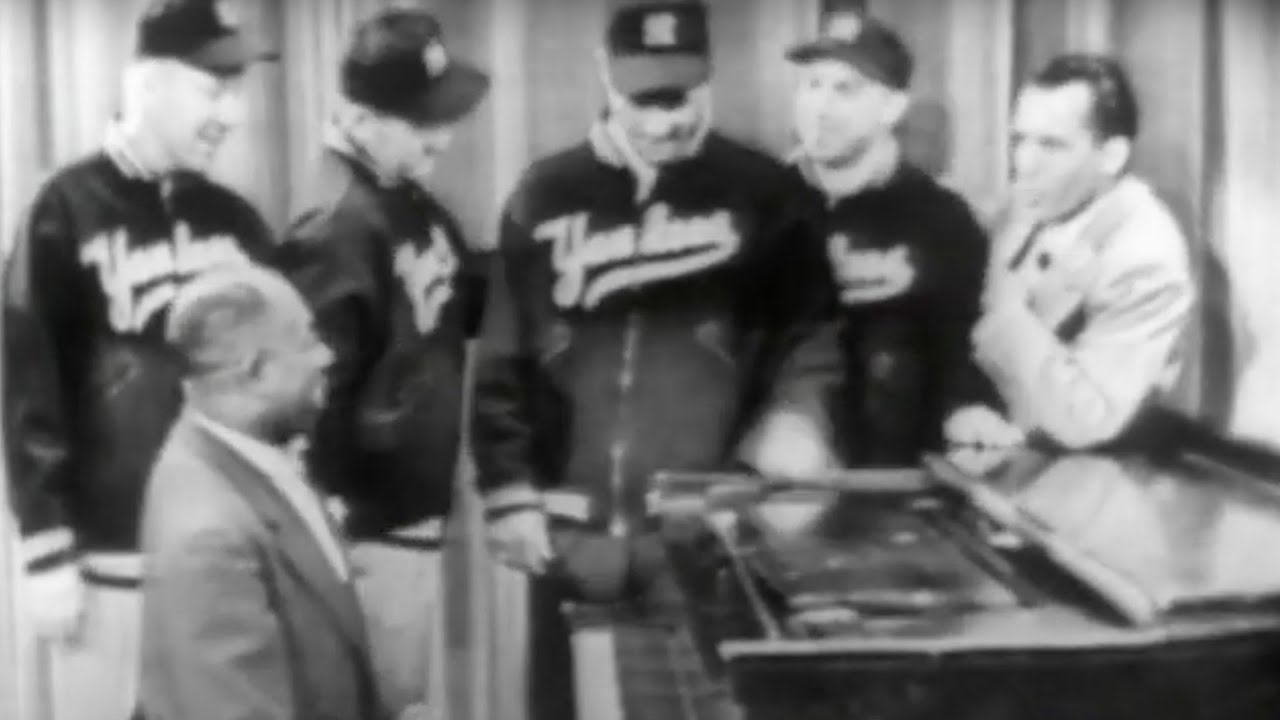
I read the article about Graham Jackson and had to find out if there was any film footage of him. Here’s something special from the Ed Sullivan Show.
I kinda want to get an accordion again. Lol. He’s great!
3 Likes
Absolutely. If some decide not to be complicit in the distribution of selective knowledge, and choose to engage in nonviolent disobedience, I’ll support that too.
It is early days. There is government censorship happening now.
I’d also say the censorship is very ill-defined. Meaning we don’t really know what we’re facing. Hopefully, just bad performance art, but I’m hearing a lot of right-wing chatter lifted from the 1960s these days.
4 Likes
Me, too, but I saw many who would rarely, if ever, been seen with a black, Asian or Hispanic student.
The latter were invisible people. Much self-segregation in college and the workplace. It’s not universal, but it’s there in some variable measure.
2 Likes
The censorship is ill-defined on purpose. It allows a very small group to exert control over the masses in Florida, North Dakota and a few other Red States to be named later. DeSantis doesn’t have to actually define what is out of bounds- he can give some examples and guidelines and the Counties and Local School Districts will do the rest, and that’s the frightening part. It gives him a loophole to expand his bans without having to explain why the new stuff is suddenly an issue.
What we’re seeing in some states (Texas?) is a cleansing of books mainly about PoC and LGBTQI+ people.
What’s clear is DeSantis has a problem with African Americans. He may have a problem with Native Americans as well, given Florida’s history. North Dakota has a nasty history with Native Americans, so I can see that state not wanting to face it’s history. In both cases, I feel like this isn’t so much a problem of distant history, but more about recent history- say the last 60 or 70 years. Some of those folks are still alive and the parents of legislators who would rather not have to defend some of the shit that was done.
5 Likes
I dunno either, but you’d probably better pack a lunch, @teenlaqueefa! 

Speaking to the subject article more generally (and less snarkily), this old cis-hetero white man is trying to figure out how to translate my experience of discomfort** into short-circuiting or arguing against these dumbassed ‘no "psychological distress (FOR RACISTS, SEXISTS, ETC.)” laws’.
**From the 1619 Project podcast a couple of summers ago and just weeks shy of my 60th birthday, I learned for the first time that
at its peak, the total value of enslaved people in the US was greater than the total value of all railroads and factories in the country.

I mean, even as a kid in a former sundown town in central Jokelahoma, I knew enslavement was a big deal, esp. for the unfortunate people who’d been enslaved, but I had never before heard (or even conceived) of the idea that it represented anything of this magnitude in or to our economy!
I still can’t describe my anger, disgust, and “psychological distress” at knowing in my bones that this important information about our history had been denied to me and others for decades–if not generations.
(For anyone wanting to hear this specific portion of the podcast, listen to Episode #2, at about 18:40.
Also worth a mention, IMHO, is their discussion (starting at about 15:10, also in Episode #2) of international finance in the form of bonds (= loans) backed by enslaved people as the valuable collateral, how this financed the expansion of cotton plantations, permitted other investors/capitalists (esp. Europeans who’d ended the international trade in enslaved people years before) to profit nevertheless from the “peculiar institution”, set the stage for the cotton market ‘bubble’ to burst, leading to the Panic (what they called economic recessions then) of 1837, and how the US government ultimately bailed out the banks (sound familiar?)!
Even as a kid, I’d heard of the Panic of 1837, but I’d never had a hint of a clue as to what happened to cause it. For American students to go another generation w/o learning this history is nothing short of malpractice.)
9 Likes
And North Dakota’s growth population has been nearly flat, only recently surpassing a high from 1930. I might guess young North Dakota born are leaving.
Another fun fact seldom taught is the the African slave trade was ended in 1807.
The 1810 census lists about 1 million slaves. 50 years later the 1860 census lists about 4 million slaves. While some were smuggled in, where did the increase come from? They were “made” here. And given life expectancy of the time, very few listed in the 1860 census were alive at the 1810 census. They were almost all “made” here.
4 Likes
I heard one time that societies put important things on their money. I have a co-worker that has a Confederate-era bond displayed on his wall. Three guesses as to what is on the bond, and Jeff Davis isn’t one-Cotton and enslaved people are two.
What I just learned in the last couple of years is how some British Lords earned their wealth. It was through the slave trade. They made a lot of money dealing in the trading of slaves, but they also owned slaves and plantations as well. When England outlawed slavery, these plantation owners were paid for the property- slaves, but nothing was offered the new-freed people but freedom.
That’s another one of those interesting topics- Sundown Towns. When I interviewed for a teaching position at a small private college in Indiana, the Provost told me about the first Black people that lived in town, and how they were burned out. This was in the 1970s! Still not sure why he felt the need to tell that story, but it gave us some insight into where we would live for a few years. I almost asked him if he had taken a good look at me- telling me that racism in Indiana existed was like saying the sky is blue. We ended living in another Sundown Town in Northern Illinois a few years later… The North Shore was full of them.
5 Likes